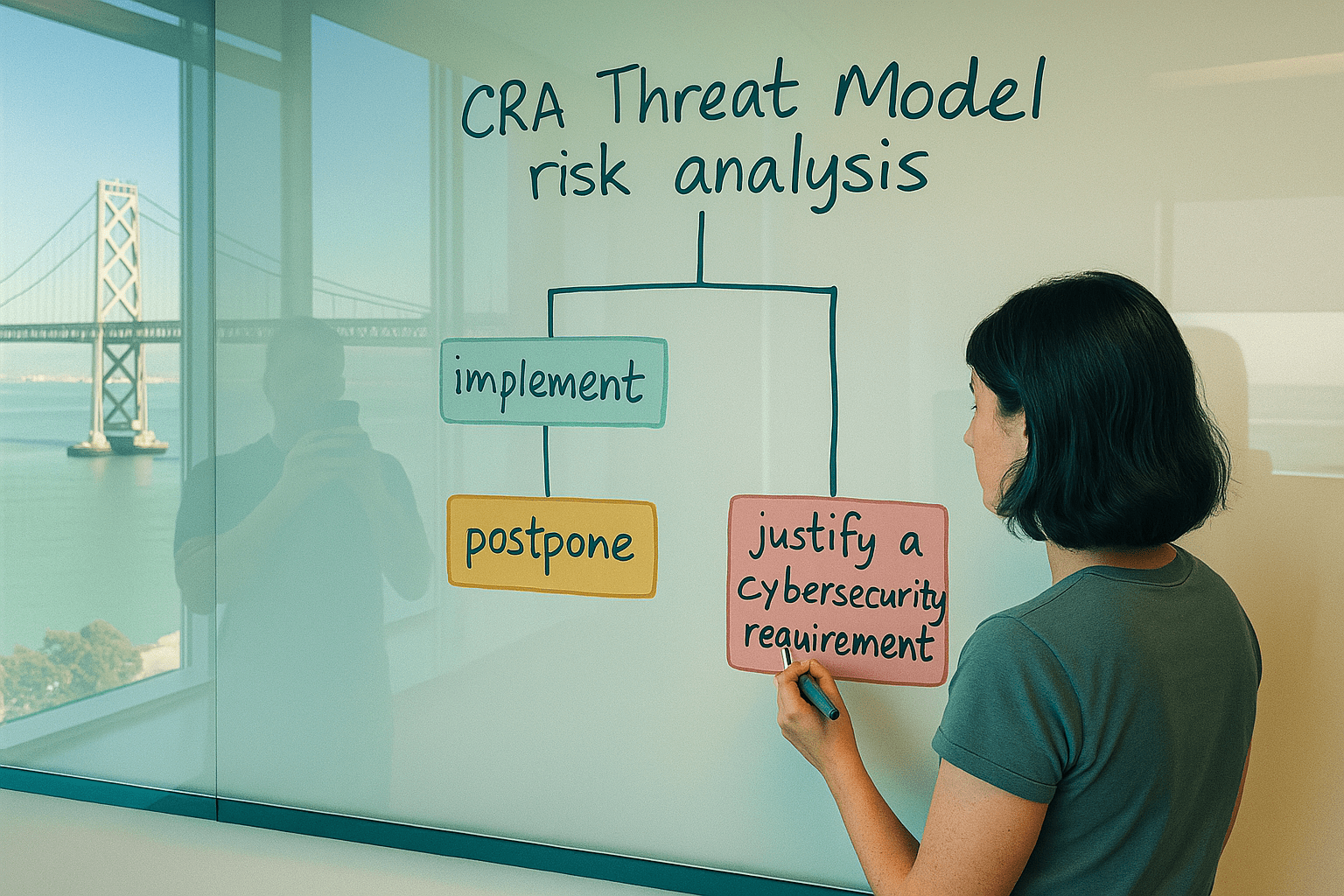

As a senior security leader, you’re tasked with steering your organization through a rapidly evolving regulatory landscape. The EU Cyber Resilience Act (CRA) – which entered into force on December 10, 2024, and applies in full from December 11, 2027 – mandates strong cybersecurity practices for every product with digital elements sold in the EU.
How can you meet these requirements strategically, without ballooning costs or stifling innovation? The answer lies in threat modeling. More than just a technical exercise, threat modeling is the structured methodology that satisfies CRA Article 13(2)’s risk-assessment mandate, enables security by design across the product lifecycle, and produces the technical documentation the law requires – in a single workflow.
This article shows how a threat modeling program, scaled across your product portfolio, turns CRA compliance from a cost center into a strategic advantage.