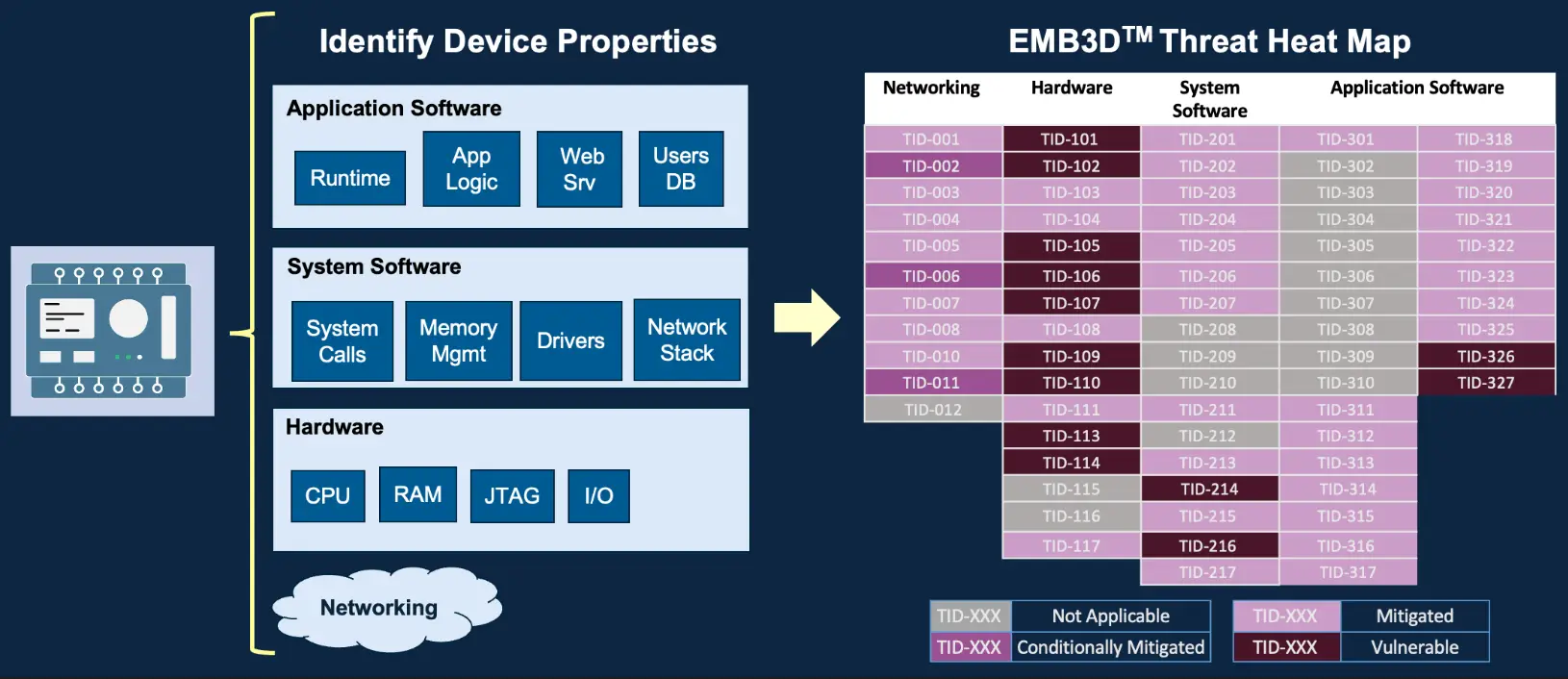

In modern society, everywhere we look, we see examples of embedded systems at work: IoT devices in our homes, critical controllers in industrial facilities, medical devices, and all kinds of vehicles. Despite their ubiquity and importance, these systems often lack robust security frameworks comparable to those in traditional IT systems. This is where threat modeling becomes critical, providing a way to think about secure design and focusing on understanding and mitigating embedded system threats.
Embedded Systems Need Special Attention
Embedded systems present unique security challenges:
- Resource Constraints: Typically, embedded devices have limited processing power, memory, and storage. This makes it challenging to implement robust security controls such as encryption or complex authentication mechanisms.
- Long Lifecycles: Unlike other systems that may be replaced every few years (such as your laptop), embedded systems in industrial control systems or medical devices can remain in service for decades, often without regular security updates.
- Physical Accessibility: Embedded devices are frequently deployed in locations that are easy to access physically, enabling attackers to gain direct access to hardware.
- Real-Time Requirements: Many embedded systems utilize strict timing requirements when responding to inputs, which leaves little room for security overhead that might introduce latency.
- Diverse Attack Surfaces: Embedded systems can be attacked through software vulnerabilities, hardware manipulation, side-channel attacks, supply chain compromises, and more.
Introducing MITRE EMB3D
The MITRE Embedded Device Security (EMB3D) Threat Model is a comprehensive framework specifically designed to address the unique security challenges of embedded systems. Released as an open-source knowledge base in September 2024, EMB3D (most recently updated to v2.0.1 in April 2025) provides a structured approach to identifying and mitigating threats throughout the embedded device lifecycle.